Tuesday, June 26, 2007

What the young folk are wearing to prom

How fantastic are this outfits made of DUCT TAPE!?


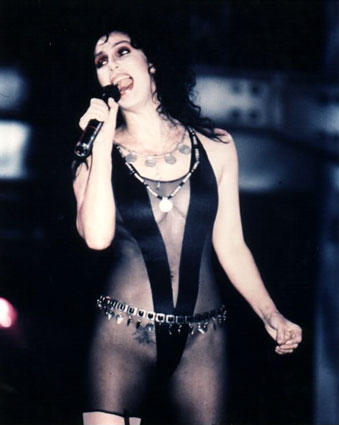
You can look at all the finalists of the competition here (I think you need to be a North American resident to vote), plus if you poke around the site a bit you'll find heaps more, and lots of them are just as good if not better than the finalists. I first saw a post about this at whip up. I am so blown away by the innovative designs. These are fully gutsy kids. I wish I could see them on the night. It strikes me too that duct tape might be a good contraception for those who don't want to lose it on the night - no zips or buttons. Then again, after lots of sweaty dancing, maybe it would start peeling off before you hit the hotel room...could go either way really. But hey, at least people aren't going to be talking about you for what happened after the prom if you show up in duct tape. Unless you wear it like Cher.

Monday, June 25, 2007

teenies not tweenies

I wandered into Readings and Borders today as I ambled home from a meeting with my thesis supervisor. My mission was to check out junior fiction (what Borders classifies as books for 4-9 year olds) as I am writing a book that currently sits between two age groups and my editor suggested that it would be nice to write it a bit younger as she said there isn't as much around for that younger age group.

And she's so right. Which is so weird because there used to be. Enid Blyton of course comes immediately to mind, but also Noel Streatfield, Rumer Godden (I love her - Miss Happiness and Miss Flower, Holly and Ivy, Mr McFadden's Halloween to name a few), Nina Bawden, Jane Gardam, E Nesbit, Lucy Boston, Michael Bond's Paddington books, Mary Norton's Borrowers series, E.B. White (most notably Charlotte's Web of course, but also Stuart Little), Joan Aiken (Gobbolino the Witch's Cat), Joan G. Robinson's Teddy Robinson books, the My Naughty Little Sister books, Roald Dahl (specially The Magic Finger, James and the Giant Peach and Fantastic Mr Fox for the very young), Milly Molly Mandy, the Flat Stanley books...Oh and Ramona. Of course Ramona. And Beverly Cleary's other books too - The Mouse and the Motorcycle springs to mind. A lot of these books are in constant reprint and it's not hard to see why.

There are so many freaking FAIRY and PRINCESS books it also made me want to vomit rainbows and butterflies. Jeez louise. Look, I have nothing against either princesses or fairies. But come on. Where are the books about ordinary girls with ordinary problems? And why does it all have to be so flipping twee? I love fairies, I even have a tattoo of one on my back, but fairies should be wild creatures, unpredictable, often malevolent. They are not all enviro-freaking-mentalists with great hair, whose biggest problem is finding a handbag to match their vaguely left-wing morality. And yes, the princess paradigm can be empowering. But these, I'm sorry, are not. Nothing that over-commodified can be empowering, nothing that slight and undernourished with ideas and complexity. And don't even start me on what there is for boys which is pretty much

.....

Look don't get me wrong, there are some great books still being published for this age group. I picked up The Owl Who Was Afraid of the Dark by Jill Tomlinson and was struck by the distinctive voice and the very authentic characterisation (you know, considering it's about owls). Oh no hang on, it's 20 years old.

I love the Tashi books by Anna Fienberg and her mum, Barbara. Martine Murray's Henrietta books are freaking cute in a slightly hairbrained freewheeling way (that's meant to be a compliment). There's some really good quality writing in the Penguin Bites series (Jane Godwin's The Day I Turned Ten is a really beautiful book in its own right). Ursula Dubosarsky has written for this age group and I know it must be elegant and captivating. And there are more, I know there are more. But the bookshelves in both Borders and Readings are so disappointing. All these generic spines, and princess and fairy books, so disappointing. Oog.

And before I get riled up I want to add that I don't think publishers are to blame. Clearly they want stronger books in this market, or mine does anyway. I just wonder if we've lost the knack somehow to write for these girls. Is Bratz to blame, with its commodified bodies and capitalist culture? Or are we scared of challenging them? Looking at that list of classics above, there's lots of books there that aren't 'easy' reads, many of them have rich voices and challenging vocabulary. Some have quite sinister characters or bad behaviour or daunting themes (like Roald Dahl's bad guys, or Charlotte's death). They're many of them not very politically correct. And yet they remain in print and popular. Are we scared to write like this, so we're letting another generation tell our children stories, not reflecting the (perhaps more complicated and confusing, certainly faster paced) world around them, where kids have more information available to them much earlier - are we scared we can't speak five year old anymore? Or has the nursery culture dried up, the days of cosy third person narrators with their readers on their knees, are we scared they don't want to sit and listen anymore?

Come on, people. Tell me some good early chapter books. Cheer me up. I know there's heaps for those slightly older kids (8-10), but those very first, keen readers who want something more than just a reader, who are confident enough with language to want characters to identify with and a really great story, please tell me there's more for them out there than Princess Perfectly Boring Pants and Fairly Stupid Fairies.

Thursday, June 21, 2007

Drift

For those of you who missed it, Drift is out in Australia.

You can admire it online here and read the blurb.

You can buy it here and here (except good lord, that's the wrong blurb - it's Michael Pryor's The Chronicles of Krangor. Silly Dymocks people) and here and here and here and here and in NZ here or whatever other online bookstore you prefer.

Or of course go to your local bookshop. I'm all for locals. If for some shocking reason they don't have it in stock, give them a good scolding and then ask them to order it in for you. The isbn is 9781741660890. If they tell you they can't order it in they are being lazy (this sometimes happens). But make sure you are spelling my name right before you burn down the shop and dance on the ashes. Actually, I don't condone violence, so only metaphorical burnings please. The dancing can be real. It is even encouraged. Consider yourself incited.

There's no publication date in the US yet. I signed a two book contract when I signed Undine with Greenwillow and at that stage wasn't even sure there were going to be sequels - the second book could have been anything as far as I know. The Life and Times of Bellybutton Lint. The Fascinating History of the Pickled Herring. The Day My Chickens Turned into Emus and Kicked the Dunny Down (or Mum Was Surprised). So Drift hasn't actually been signed there yet. All those negotiations take place between publishers and I know Random House's fantastic Rights Manager Nerilee Weir is on the job...I'll let you know more when I do.

As my new favourite blogger Audrey says, Peace Out (only she speaks in blue).

Monday, June 18, 2007

Oi.

Go read guest-blogger Sophie Masson's post on the Good Reading Magazine blog about why she writes for children and all the comments from lots of great kid's book writers (including me).

We are loving Good Reading Magazine at Eglantine's Cake right now because Anastasia Gonis gave Drift a FIVE STAR REVIEW in the June issue.
This magical trilogy is a reading experience. The sequence is never linear but written in loops, in and out of alternative worlds, governed by the laws of physics. Drift is full of significant meanings within meanings: highly intelligent and imaginative.
We also love Good Reading Magazine because it's about books, and it actually devotes serious critical attention to children's books.

Saturday, June 16, 2007

Why reading matters

"What are you here for? That's the question you have to ask. Reading matters, we all agree upon that. Why does reading matter?"
David Levithan

Please, listen to him say this and more. It is both educational and elivening, edifying and inspiring. Kids need books. Kill the vampires. Listen to Levithan. If you are a parent, a teacher, a writer, a publisher, a librarian, a reader, a teenager, if you ever were a teenager or if you are planning on being one sometime. If you are gay, straight, stupid, smart, happy, sad, angry...if you ever went to the bookshelf and the book you wanted wasn't there, the book you've always looked for and never found, the book that would help you discover who you are, the book that was about you, about a girl, about a boy like you, then listen. If you found the book, found yourself in books, then listen and imagine what it would have been like if that book, or those books, hadn't been there.

Via Lili, who fights the good fight.

Friday, June 15, 2007

Magical, yet silly. Daggy, yet awesome.

I have this weakness for musicals. When I was a kid, like about eleven, I loved the album of Chess, The Phantom of the Opera was a close second. The movie Grease 2 was also a favourite (with the foxy talents of Michelle Pfeiffer, so my choice if she and Olivia Newton John were ever going to have a battle). There's something so daggy about them (musicals, not MP and ONJ), yet there's a magic too, suddenly everyone knows the words, the moves...those big dance numbers are always the best. A Chorus Line was my absolute favourite...a musical about musicals. Back then I was an aspiring actor too. Apparently quite a few women writers start of wanting to be actors. Interesting.

When Joss Whedon did the musical Buffy episode, Once More With Feeling I was in musical paradise. An ironic musical about musicals, about how daggy yet magical they are (and in this case everyone sings because of magic), and with a rocking soundtrack to boot, showing a genuine affection for the utter silliness of the genre, with heart.

As Wikipedia says, in a musical, when the emotion gets too much for words, you sing. When it's too much for song, you dance. It's hilarious. It's also deeply moving, music is such an effective way to stimulate immediate emotions, even if part of you is in internal hysterics about the saxophone solo.

Anyway, last night Martin and I went to see Miss Saigon. Martin bought me a ticketek gift voucher for my birthday, intending for us to see Swan Lake, but we forgot to book (oops) and eventually we had to pick something last minute, since we looked at the vouchers at the end of May and realised it expired in June. So it wasn't exactly our first choice, but we knew it would be a spectacle. Plus I have this secret weakness for musicals.

The sets were incredible, including amazing use of animation with the helicopter lifting out troops. The acting was great. The music was a wee bit eighties in places (and not always the good kind) but in places it was just incredible, peaking with the song The American Dream at the climax, sung by the character of the Engineer (a pimp), played by Filipino actor Leo Tavarro Valdez, which is one of those songs that shows you why the Eighties were let to exist.

The story however failed to satisfy me.

**Spoilers start now**
The basic plot involves a whirlwind romance between a G.I. called Chris - disillusioned by war and an exploitative, ugly Saigon - and a young, 'innocent' Vietnamese woman, Kim, who has been forced to go into prostitution (gosh, but luckily it's her first night, so she's still 'pure'). It was told with a leap in the chronology, we see them fall in love and kind of 'get married' and then there's a three year gap in which she has ended up living on the streets in Saigon (later you find out with a 3 year old child) and he's married, but tortured by nightmares, in the US. In the second act there's a flashback to the night they got separated. However the flashback (while visually amazing) doesn't actually reveal anything we haven't managed to work out for ourselves. And it kind of slows down the pace of the story so that the ending feels rushed - to me the emotional heart of the story was lost.

I was uncomfortable with some of the themes. Of course the depiction of Asians is deeply flawed, Orientalism at it's worst, dealing with the tedious stereotypes of sexual object/china doll, rigid traditionalism/rush to embrace the seedy side of the West, and not able to really grapple with the psychologies of its Asian characters. And the sexual objectification of Asians depicted bordered closely on becoming objectifying in itself - there was something a bit too video smash hits about the lap dancing women. For example, why did all the actors have to be tall, thin, busty and beautiful? Surely not all the prostitutes in Vietnam were? Later in Bangkok there's more pole dancing, a kind of automaton asexuality on one hand, and yet again, I felt uncomfortable that it bordered on glamorising their plight, the costumes, the perfectly sculpted bodies. I felt there was a layer of critique missing, that the spectacle was more important than the ideas behind the spectacle. It was a case of being told one thing, but shown another.

However, it is equal opportunity racism. There is a similar restriction in depicting Americans, who are also portrayed as a cluster of stereotypes. Only one character really came across as genuinely complex to me, which is a second American character, John. In the opening scenes, in Vietnam, he comes across as shallow and exploitative, however in the three years since leaving Vietnam he has become obsessed with helping the children parented in Vietnam by American G.I.s. While this change isn't mapped, it's an intriguing glimpse of psychological depth and character growth - he seems to genuinely care about these children (perhaps wondering if he had parented some himself?). And yet there is a cultural currency in the way these kids are discussed, as if a part of America has been left behind, that also made me uncomfortable. All of the other characters struggle with duality and ambivalence (love and hate, innocence and experience) yet I didn't feel that this was fully portrayed...perhaps some of the sets were too awesome, perhaps there needed to be a bit more character and a bit less environment, a bit more nude lighting...but the flaw is largely in the writing. Sometimes sets and lighting in a musical (or any kind of theatre) gives you a sense of being actually inside the character's head - Miss Saigon managed this with, say, The American Dream, playing out the Engineer's fantasy life. But I think one of the weakness is the story tries to be about America and Vietnam (so the scenes were more about portraying the sense of place), with the characters representing aspects of the place and the troubled relationships between the two countries, and so we miss out on some of the internal life and texture of the characters.

Maybe for me the problem was that our attention was shifted from the lovers to the child, the vestige of the love. And in that moment the Love (which I didn't really buy at the beginning, I didn't 'feel the love' until later on, when Chris was singing to his American wife about how Kim was the only real thing he'd seen in Vietnam, which seemed quite believable, even haunting) truly became object rather than dynamic force. It made love seem static and sited elsewhere, the child actor (a boy of about four?) was lovely and gorgeous and did a great job, but the way his presence was used, the way he was carried about the stage further created this impression that he was an object rather than a dynamic continuation of the love between Kim and Chris. He was a prop more than a character. The second act was slightly unsatisfying, the ending felt rushed. This musical at least wasn't about character, and perhaps for me, character is what I look for. Someone so overwhelmed by their emotions that goddammit, they just have to sing...and when their voice fails them...there's always the medium of dance. Maybe Miss Saigon needed more dancing.

**Spoilers end**


Still it was great to have a night out and to enjoy a real spectacle. I am sure Miss Saigon has come a long way over the years since prosthetic 'Asian' eyes and minstrel-esque faux tan faces. It will be interesting to see if anyone ever manages to direct it in a way that tells some of the story that remains untold. I know I came home writing the screenplay in my mind. And yes, there was dancing. And it was directed by Joss Whedon.

Wednesday, June 13, 2007

Lightning Bug News, plus meet Scuttlebug

Martin has been busy updating Lightning Bug, including a great new page with a bunch of writing exercises.
He's also started a blog called Scuttle Bug. The plan is to get some guest contributors to write posts about writing - from the planning stages to the end result. He already has a few writers lined up, including yours truly, I'm going to write a post about characterisation in a few days. The first one is already up, by Martin about mind-mapping for story planning. Hopefully, like Lightning Bug (which gets hundreds of visitors ever day and has had lots of positive reviews and reception online) the blog will end up being a great resource for a range of writers and educators.
Because Martin is just across the table from me, I asked him a few questions, which turned into the interview below.

Why did you update Lightning Bug?
Because of feedback I received from school groups, home educators and writers about making it easier to navigate, plus suggestions about the general look of the site and resources they wanted.

Who is Lightning Bug for?
Lightning Bug is for everyone! For already confident, literate writers and those just starting out. Plus there's stuff to help anyone who has to write write a story for school if they're not really into writing.

Who is using it now?
It's really popular with homeschooling networks. School and university groups. And I get lots of nice feedback from individuals, from Masters Students to younger kids who have found it by themselves.

Have you had an opportunity to use it in the classroom?
Yeah and the kids respond well to it and use it as a homework resource. One of the kids from North Fitzroy Primary School came up with the writing topic this month for Firefly.

How would you recommend a first time visitor should use the site?
Depends what stage of writing they're at. If they're really just beginning, they could go to the 'what sort of writer are you?' page. If they're looking for story ideas they could go to the develop a story idea or writing exercises page. There are ideas for breaking writer's block on the finding inspiration page. If they have a story already they might like to submit it to Firefly.

What made you build Lightning Bug in the first place?
To help young adults engage with story writing, because it's such an effective way to express a point of view and because I'd seen it in action in classrooms. But also I wanted to design a story writing resource that catered to adults as well, and I wanted to find a way of marrying the skills that I'd gained from a professional writing and editing course and what I'm learning studying Education, plus all the years I spent working in information technology. Carlos Fuentes said 'Writing is a struggle against silence.' I think it's really relevant for young people, who need to find a voice to speak for themselves, to struggle against the fact that sometimes no one seems to be listening. To learn to express yourself articulately and with originality is like finding a key to the adult world.

What inspired the 'What kind of writer are you?' page? That's really quite a unique approach, isn't it?
The Thinking Hats of Edward De Bono. For particularly young authors who are less confident about their writing abilities, it shows that you don't have to be a particular kind of person to be a writer. If you're sporty, you can still be a writer. Steven Herrick, who now writes verse novels, used to be a football player at school. There's ideas for people who are more visual, or for kids who like science or maths.

Why a blog?
Because it's another way to help engage reluctant writers and encourage regular writing which is a key to develop as a writer. It's also a way of discussing and engaging with ideas about writing and technique, like the mind maps. I'm hoping that the blog will help broaden Lightning Bug as a concept, with a more active involvement from the Lightning Bug audience. I'm hoping it will get young writers more involved with using it as an active resource (not just a static piece of reference material). It also makes it more accessible for some writers. The only way to be involved before was to send a story through to Firefly once a month and some writers just aren't confident enough for that yet. Ultimately I'd like the comments to provide some forum for discussion and maybe sometime down the track some of Lightning Bug's users might want to contribute some articles of their own to Scuttlebug.